
New to Eternia? How the destination icons work, when to use Boost and Battle Retry, which early purchases are traps, and when cooking starts paying off.
Tales of Eternia Remastered Beginner Guide: What to Set Up in Your First Hour
Extreme is selectable on a brand-new save, all four destination icons sit behind one toggle at Menu > Custom, and the level cap is 250 - which is why the paid Lv. Up packs are the worst early purchase there. Boost, Battle Retry, Quick Recovery and the random-encounter switch all ship in the Remastered release (October 2026), and none is an unlock.
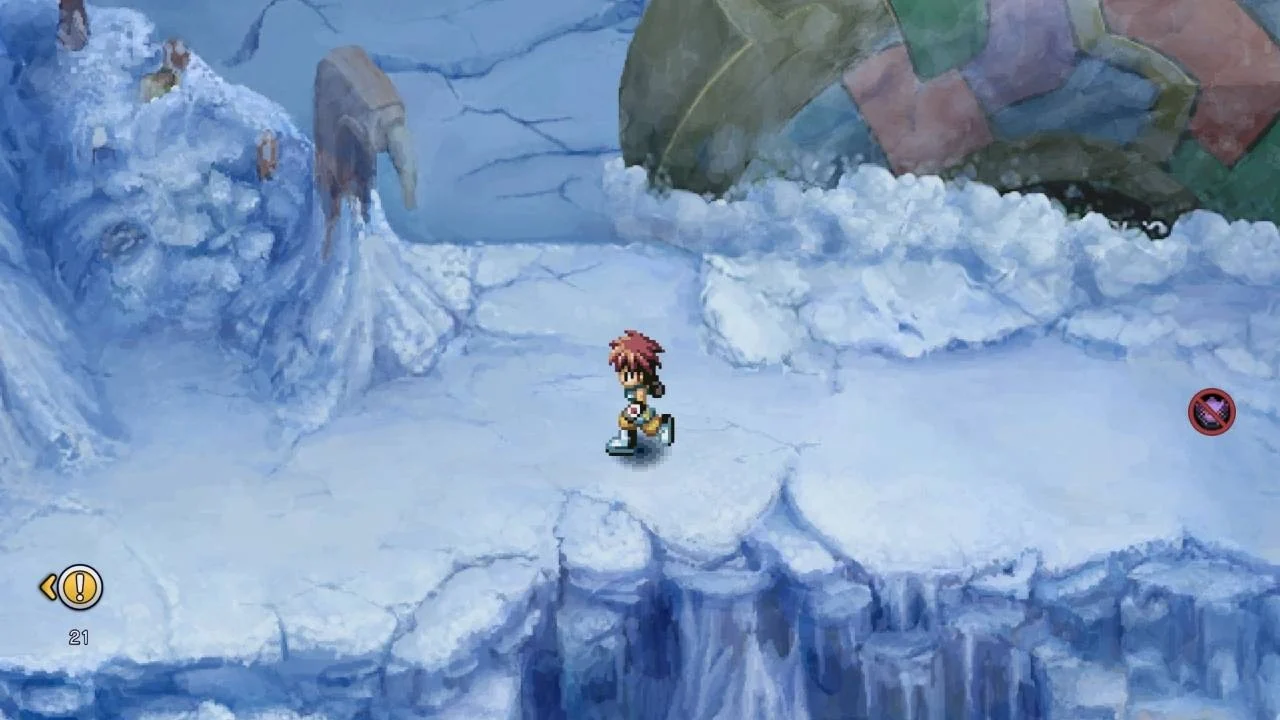
- Yellow exclamation mark: story destinations. Star: valuable items. Hourglass: timed titles and items. Blue exclamation mark: events that teach new techniques.
- Boost, Movement, Combat Level, Graphics Mode and SE Mode all live in the Custom menu, and the game autosaves after map changes and events.
- Extreme is available from the very start; Unknown waits for a completed save.
- The level packs cap themselves at level 250, so the +10 packs are the cheaper route to a ceiling you will hit anyway.
The Four Destination Icons and What Each One Marks
Bandai Namco's change list for this release is specific about what each icon does.
A yellow "!" icon will be displayed at destinations in the main scenario. The distance to the destination will also be displayed. You can toggle the display ON/OFF from Menu > Custom > "Destination Icon".
| Icon | What it marks |
|---|---|
| Yellow exclamation mark | Destinations in the main scenario, with the distance shown |
| Star | Valuable items like encyclopedias and maps |
| Hourglass | Titles and items with a limited acquisition period |
| Blue exclamation mark | Events that teach new techniques |
All four share one switch: Menu > Custom > Destination Icon.
Official source: Remastered change list (Bandai Namco official site)
Two limits matter: some gimmicks may not display an icon, and the hourglass promise covers titles and items only. The wording above is the official Japanese list's translation, published by Nintendo Everything.
Destination Icon is a display toggle, not a permanent state, and it governs all four icon types at once. With it off, the hourglass that warns you about expiring titles and items never appears.
Menu > Custom: The Settings Worth Touching in Hour One
Open Menu > Custom once and work down this list.
| Setting (and where) | What the official change list says | Call for hour one |
|---|---|---|
| Boost Function, under Menu > Custom | Added to help the game progress more smoothly; toggled on and off at any time, with the exception of a few items | Leave on |
| Quick Recovery, a button press on the menu screen | Heals all party characters HP and status ailments at once; you pick the healing method and percentage | Replaces three menu trips |
| Battle Retry, from the Game Over menu | After losing a regular battle you can try again from the Game Over menu | Insurance, not a plan |
| Movement, under Menu > Custom | Sets the default to walking or fast movement; holding a button on the field also moves quickly | Set it to fast |
| Graphics Mode and SE Mode, Menu > Custom | Switches graphics and sound effects between Remastered and Original; the UI stays the same | Taste |
Two more entries sit in the same menu: high-speed AUTO combat, switched on with a button press in battle and useful only for grinding, and the Skit and Sound players.
Official source: Everything New in Tales of Eternia Remastered (Bandai Namco Europe)
Two honest gaps: nothing official states what Boost changes numerically, and Battle Retry is documented for a lost regular battle with no word on boss fights.
Extreme Is Selectable From Your Very First Hour
Bandai Namco's English feature article is blunt about the biggest onboarding question.
Extreme difficulty is available from the very start, so you can dive straight into a tougher fight. Once you've completed the game, Unknown difficulty unlocks for your ultimate run.
The official Japanese change list describes the same unlock from the other side: the tier that only opened on a second playthrough in the original release can now be picked from the start of the first, and the newly added Unknown tier is what waits for a cleared save. The documents disagree on a name, not on timing - English material calls the starting tier Extreme, the Japanese list calls it Mania - and both point at Menu > Custom > Combat Level for changing it later. For a brisk story run, start lower and raise it once you have a full party. The difficulty modes guide covers the tiers and the battle system guide covers the combat itself.
Which Early Purchases Are Traps
The traps are on the store page, not in the item shop. Prices are official launch-week listings from October 2026, and regional pricing differs.
| Purchase | Price seen at launch | Official description | Verdict |
|---|---|---|---|
| Lv. Up+5, four separate packs | ¥12.00 each | Raises the level of all party members by +5 | Skip |
| Lv. Up+10, two separate packs | ¥18.00 each | Raises the level of all party members by +10 | Skip |
| Deluxe Upgrade Pack | €24.99 and $24.99 | Battle BGM pack, Digital Artbook and Soundtrack, Super Growth Support Item Set | Art and music purchase |
| Digital Artbook and Soundtrack | Inside that pack | Artbook and soundtrack material | A separate application, so nothing unlocks in your save |
| Super Growth Support Item Set | Inside that pack | A set of consumable items | Contents are not itemized publicly |
The level packs matter most because their own descriptions carry the ceiling: maximum level 250 cannot be exceeded, and both pack sizes feed the same cap. Nothing official says whether a level bought this way brings the stat gains and technique unlocks of a level earned in battle.
Official source: Tales of Eternia Remastered on Steam
The official conditions state the Battle BGM change applies only to random encounter battles, and only for buyers of the Deluxe Edition or the Deluxe Upgrade Pack. Explore with encounters disabled and you are buying music you will not hear.
Gald: What an Early Purchase Actually Costs You
The remaster publishes no shop price list. These figures come from the 2000 PlayStation walkthrough on RPGClassics, filed there under the original's North American name Tales of Destiny II; they describe that version's layout, not measured pickups in this release.
- Rasheans, Elder's house: 500 Gald in a vase, next to the Collector's Book.
- Mt. Mintche: 600 Gald and a Pole Axe on the upper level of the cave section. The Forest of Temptation adds 400 and 765 Gald.
- The larger sinks are quest payments, not gear: an 80,000 Gald donation at Max's office in Tinnsia, and a 600 Gald hot spring rest that feeds a sidequest.
Buy equipment that stays on a character, do not bulk-buy healing stock that Quick Recovery already covers, and keep a reserve for quest payments rather than weapons - a bad purchase is not permanent, because items in possession are on the official carry-over list. The leveling and Gald farming guide covers where the money is worth earning.
Cooking and Recipes: Skip It in Hour One
In the original release you learned recipes from characters around the world and cooked outside battle with ingredients, and the results healed the party or raised its status. The remaster publishes no recipe table, so treat any ingredient list you find online as original-release data. In your first hour you own roughly one recipe and no stock, so cooking does nothing a shop does not do faster. It pays off later, once you have recipes, ingredients, and a job Quick Recovery cannot do: status work, quest ingredients, or the cooking contest. In the original layout the first recipe arrives free, from the Wonder Chef in Rasheans. The cooking and recipes guide covers the dishes, including the four Bandai Namco published as real cooking instructions for this release.
Official source: Tales of Recipes Remastered (Bandai Namco)
What Carries Into a Second Playthrough
Loading a cleared save opens a data transfer screen where each element is switched on or off; the official change list names eight, including items in possession, learned techniques, recipes and both encyclopedias. Titles are the odd one out: the July 2026 list says they are not transferred, while the day-one patch notes of October 16, 2026 add Titles to the elements carried into later playthroughs. The new game plus and carryover guide tracks the full set.
Official source: Day 1 patch notes (Bandai Namco Europe)
FAQ
Can I start Tales of Eternia Remastered on Extreme difficulty? Yes. Bandai Namco's English feature article states that Extreme difficulty is available from the very start, so it can be chosen on a fresh save. Unknown is the tier that unlocks after you complete the game.
How do I turn off random encounters? Bandai Namco's article confirms the feature, and the Steam store page lists the ability to disable enemy encounters. Neither publishes the menu entry, so check the in-game Help.
What is the level cap? 250. The store description for the Lv. Up packs states that the maximum level of 250 cannot be exceeded, so the packs stop at the ceiling like ordinary experience does.
Is there multiplayer? No. The store listing shows a single-player category and nothing else, and press coverage describes this release as following the PSP port, which had already dropped the multiplayer of the 2000 PlayStation original.
Related Guides
- Tales of Eternia Remastered Walkthrough: Full Guide - the route out of Rasheans.
- Tales of Eternia Remastered Difficulty Modes Explained - what Extreme, Mania and Unknown change.
- Tales of Eternia Remastered Battle System Guide - the A-LMBS fundamentals behind Boost.
- Tales of Eternia Leveling and Gald Farming Guide - where the speed mode pays off.
- Tales of Eternia Recipes and Cooking Guide - every recipe in the remaster.
- Tales of Eternia Original vs Remastered: What Changed - what this release kept from 2000.
More Tales of Eternia Remastered Guides
Tales of Eternia leveling and Gald farming: Boost's experience and encounter dials, when grinding pays, and the mid-game buys worth saving for.
The Graphics Mode and SE Mode toggles, English or Japanese voices, destination icons and assists, and why this build follows the PSP port with no co-op.
Boxed copies exist in Japan and Europe on PS5, Switch and Switch 2, while North America was reported digital-only. Game-Key Card details, all dated.
Tales of Eternia Remastered on PS5, PS4, Xbox, Switch, Switch 2 and Steam: target resolutions, the 60fps cap, day-one update sizes and measured load times.
Tales of Eternia Remastered fixes: the Switch analog movement bug and its d-pad workaround, long Switch 1 loads, and the docked Steam Deck 720p lock.
Every Tales of Eternia minigame and where to find it: the Rasheans river race, Craymel Ball, Chamballoon, the stone game and the cooking contest.
Every Tales of Eternia artes family by character: Reid, Farah, Keele, Meredy, Chat and Max, with TP costs, unlock conditions, combo routing and Mystic Artes.
Cooking in Tales of Eternia Remastered: how the 36-recipe cookbook works, the Wonder Chef, the Chambard contest, and four official real-world dishes.